
What Determines Diesel-Range Fuel Recovery from Waste Oil?

Author: Mr. JAY
Senior Petrochemical & Used Oil Recycling Engineer
With practical experience in used oil recycling systems, fuel recovery routes, and industrial optimization, he focuses on converting waste hydrocarbon streams into cleaner and more valuable products.
The quantity of diesel obtained from waste oil does not depend solely on the processing capacity of a recycling facility. The composition of the feedstock, the conditions of the conversion process, the effectiveness of fractionation, and the required product standards all play a role in the final result.
What Does Diesel Recovery Rate Actually Measure?
Before comparing recovery rates, it is necessary to clarify what the figures represent. Waste oil processing involves several different yield measurements:
- Feed conversion: The proportion of the feedstock that undergoes chemical conversion during processing.
- Liquid yield: The amount of liquid oil recovered after processing.
- Diesel-range fraction yield: The share of the processed material that falls within the selected diesel boiling range.
- Finished diesel yield: The amount of finished diesel recovered relative to the specified feedstock input.
These figures are not interchangeable. A high liquid yield does not necessarily indicate a high diesel yield, because some components may fall into other boiling ranges and require separate processing.
Weight-based (wt%) and volume-based (vol%) recovery rates are not directly comparable unless they are converted to the same measurement basis. Rates calculated from wet feedstock may also differ significantly from those based on dehydrated oil.
Example calculation:
Diesel Recovery Rate (wt%) = Finished Diesel Output (kg) / Waste Oil Feed Input (kg) × 100
Both the feedstock basis and the finished diesel product used in the calculation must be specified.
Feedstock Composition Sets the Recovery Potential
The chemical composition of waste oil determines the initial conditions of the conversion process. Used engine oil, industrial lubricating oil, and mixed waste lubricants may have different proportions of hydrocarbons, water, additives, and impurities.
Several factors directly affect processing:
- Water content: Water is part of the input feedstock but does not form diesel fuel. Higher moisture levels increase the need for dehydration.
- Sediments and carbon deposits: Insoluble impurities can cause fouling, affect heat exchange, and increase filtration requirements.
- Hydrocarbon composition: The proportion of recoverable hydrocarbons and their boiling-point distribution influence the potential diesel output.
- Sulfur and metal impurities: These contaminants can increase downstream treatment requirements.
For example, two batches of used oil with the same incoming weight may have very different recoverable hydrocarbon contents. One may contain more water and dirt, while the other may contain a higher proportion of recoverable oil compounds.
Therefore, the amount of diesel that can be produced cannot be estimated based solely on feedstock weight. Laboratory testing is an important first step.

Conversion Conditions Determine the Product Distribution
Conversion conditions, whether thermally and/or catalytically induced after pretreatment, affect the composition of the recovered hydrocarbons.
Temperature is one key condition. Insufficient severity may leave too much of the heavier hydrocarbon material unconverted, while excessive temperatures or residence times may promote undesirable secondary reactions and coke formation.
Other important conditions include:
- Residence time: Determines how long the feedstock is exposed to the reaction conditions.
- Catalyst type and amount: Influence reaction pathways and the distribution of light and heavy hydrocarbons.
- Pressure: Depending on the system configuration, affects vaporization and separation behavior.
- Heat-transfer efficiency: Helps maintain stable operating conditions and minimize temperature fluctuations.
However, a high conversion rate does not necessarily result in a high diesel yield. Further cracking may produce more light hydrocarbons rather than increasing the diesel fraction.
The objective is to establish operating conditions that produce the right proportion of hydrocarbons for the required end product.
Fractionation Determines How Much Fuel Falls Within the Diesel Range
Even when conversion is successful, the resulting liquid contains hydrocarbons with different boiling ranges. Fractionation separates these components according to their volatility and the selected operating conditions.
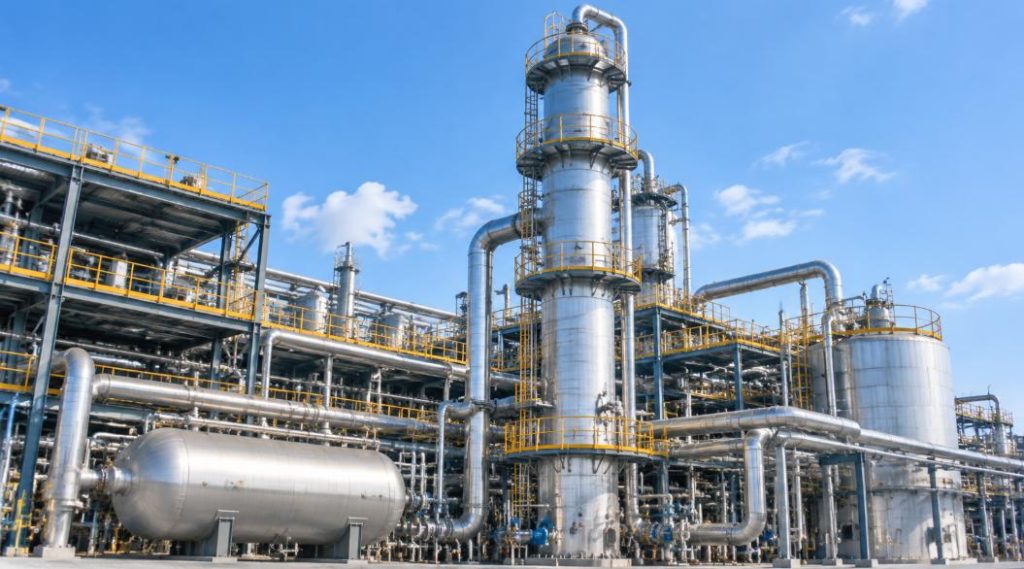
The main product streams may include:
- Light streams: Low-boiling hydrocarbons that may be reused as process fuel, depending on their characteristics and the plant design.
- Diesel-range streams: The targeted middle-distillate fraction, which may undergo further refining before it can be used as fuel.
- Heavy streams: High-boiling materials that may require further processing or appropriate residue management.
The selection of fractionation cut points affects the diesel recovery rate. An unnecessarily narrow diesel boiling range may exclude recoverable hydrocarbons. A wider range may increase the apparent quantity but also include undesirable lighter or heavier components, affecting properties such as flash point, viscosity, and distillation characteristics.
The key consideration is the balance between quantity and quality. A suitable fractionation system should target the required product range rather than simply maximizing the amount recovered.
Product Quality and Process Losses Affect Final Recovery
The amount of diesel-range fraction separated from used oil does not necessarily correspond to the amount of saleable finished fuel.
Further refining may be required, depending on the feedstock and product characteristics, to control sulfur levels, improve color, remove impurities, and achieve the required stability.
Other factors also affect the overall material balance:
- Incomplete condensation: Can reduce the amount of recoverable hydrocarbons collected in liquid form.
- Non-condensable gas formation and material losses: Can reduce liquid product recovery.
- Residue formation: Reduces the proportion of feedstock available for liquid fuel production.
- Additional refining: May change the final product quantity as well as its quality.
Buyers should therefore distinguish between the preliminary diesel-range fraction and the finished product that meets the required fuel specifications. Both output quantity and laboratory test results matter.
How to Evaluate a Waste Oil to Diesel Plant Before Investment
Recovery estimates should be realistic and based on both the properties of the feedstock and the configuration of the plant. Consider the following questions before selecting a system:
- What type of feedstock can the plant process? Ask for information on water, sediment, viscosity, sulfur, metal, and hydrocarbon properties.
- How is the recovery rate calculated? Confirm whether the calculation uses wet or dehydrated feedstock and whether the reported output is a diesel-range fraction or finished diesel.
- Is a complete material balance available? Request estimates for diesel, light fractions, gas, water, and heavy fractions.
- What product specifications can the process achieve? Consider sulfur content, flash point, viscosity, and other relevant fuel specifications.
VBOLT offers a complete waste oil to diesel plant package encompassing pretreatment, dehydration, distillation, catalytic conversion, fractionation, and diesel production. Plant capacities range from 5 to more than 200 TPD, depending on the operating conditions and project requirements.
The plant has a design reference diesel yield of 80–85 wt%. The calculation basis for this figure should be confirmed against the specified feedstock and product conditions. For an accurate project estimate, actual feedstock characteristics and product requirements should be used to prepare a material balance rather than relying on design reference data alone.
Planning a waste oil to diesel project? Explore VBOLT’s waste oil to diesel plant or contact our engineering team to discuss your feedstock, expected diesel output, and suitable plant configuration.