
What Affects the Profitability of a Waste Oil Recycling Plant?

Author: Mr. JAY
Senior Petrochemical & Used Oil Recycling Engineer
With practical experience in used oil recycling systems, fuel recovery routes, and industrial optimization, he focuses on converting waste hydrocarbon streams into cleaner and more valuable products.
The profitability of a waste oil recycling plant does not solely depend on processing capacity or equipment investment. Instead, variables such as raw material cost, efficiency of the oil recovery process, quality of the recovered products, operating expenses, and demand for the products are critical.
Two plants with the same processing capacity will be able to have totally different outcomes because of dissimilarities in the raw material quality, process configuration, operational efficiency, and product distribution methods.
These factors need to be known before an investment is made.
Feedstock Quality and Procurement Costs
As waste oil is the principal primary feedstock for the recycling process, its cost and quality have a great impact on costs.
The main determinants are:
- Purchase price and supply stability. High costs will negatively impact margin from the difference between production expenses and product pricing. Unavailability of raw material may limit the production capacity of a facility.
- Water and sediment content. Raw material with high content of these will require additional pretreatment and will have lower content of usable oil per ton of feedstock.
- Feedstock composition. The content of additives and impurities in different types of waste oil differs greatly; thus, the process of processing the oil will differ, as will the quality of the resulting product.
- Transportation costs. Collection distance, storage requirements, and logistics can significantly increase the effective cost of raw materials.
To evaluate the project comprehensively, feedstock should be analyzed with respect to its real composition and oil content.
Recovery Yield and Process Configuration
The choice of recycling process impacts the amount and quality of products obtained.
For processes aimed at base oil production, pretreatment, dehydration, vacuum distillation, and even further refining will be necessary. It all depends on feedstock properties and base oil specifications.
The selection of a suitable waste oil to base oil plant depends on the feedstock characteristics, required product quality, and expected processing capacity.
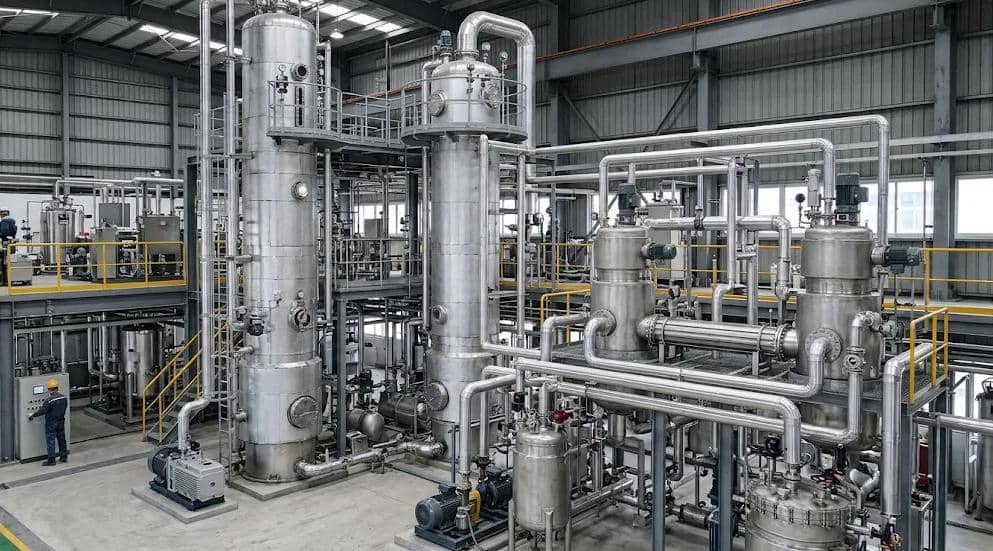
Several factors affect economic performance:
- Efficiency of pretreatment: Efficient filtration and dehydration allow avoiding contamination and protecting equipment further in the process.
- Efficiency of distillation: Appropriate configuration of vacuum distillation and thin-film evaporation allows extracting useful fractions of oil while reducing the number of thermal cycles.
- Need for further product treatment: In some cases, further refining may be required (solvent extraction or any other method of treatment). This involves additional expenses, but improves the quality of products.
- Expenses on energy and consumables: Heating, electricity, cooling, consumables (chemicals, filters), etc. impact the cost per ton of processed feedstock.
Higher recovery yield does not automatically provide greater profitability of the recycling process. The obtained product should be suitable for the market, and its price should justify the processing expenses.
Actual Capacity Utilization
Capacity as designed for a plant is not the real output per year.
For instance, a plant rated at 20 tons per day may operate below capacity due to insufficient feedstock, maintenance needs, equipment problems, or unstable operations.
Some factors influencing actual annual throughput are:
- Number of operational days
- Average daily handling capacity
- Reliability of the supply of feedstock
- Availability of equipment
The low utilization of capacity causes a higher fixed cost of operation for each ton of oil handled. The labor cost and other fixed costs remain constant regardless of whether the plant is running below capacity.
For this reason, the investors should base their analysis of the realistic annual throughput of the plant on the availability of feedstock in the region.
Operating and Environmental Costs
There are some cost factors that are easy to miss when calculating the initial investment but can significantly affect profitability in the future.
Some key operational expenses are:
- Labor and technical management
- Maintenance and spare parts
- Electricity, fuel, water, and chemicals
- Wastewater and exhaust gas treatment
- Sludge and residual waste disposal
- Warehousing and raw materials handling
Environmental compliance is another important consideration. The treatment of waste oil might produce wastewater, exhaust gas, and sludge. The treatment systems needed depend on the local environmental requirements and the chosen process.
It would be better to account for such expenses in the project budget from the start rather than face them unexpectedly.
Product Quality and Market Demand
The end products will influence how much income can be generated from the plant.
A waste oil recycling plant could manufacture recovered base oils, fuel products, and other marketable fractions, based on the plant’s design.
But the volume of the product alone will not define the income. The product specifications, consistency, and compliance with applicable standards are often considered by the buyers.
Before deciding on a certain process, the investors must do their research on:
- Local demand for the products
- Product specifications needed
- Possible buyers of the products
- Market price and transportation costs
- If there are further steps to be taken prior to selling
The economic advantage of such a process that makes higher value-added products should be compared with the selling price and production cost.
How to Evaluate a Waste Oil Recycling Project Before Investing

An effective feasibility study should encompass all aspects of a given project, starting from materials sourcing to marketing of the end product.
These steps may serve as an effective starting point:
- Determine availability of feedstock: Quantify feedstock amount, quality, purchase cost, and availability.
- Determine target products: Define whether a given project will concentrate on obtaining base oils, fuel oil, or other final products.
- Choose the right process: Select a process configuration that would be in line with the chosen product/feedstock.
- Calculate operating costs: Include energy cost, labor, maintenance, consumables, environmental treatment, and residue disposal.
- Consider various scenarios: Compare conservative, normal, and optimistic operating conditions.
A basic financial model can start with:
Annual Revenue = Recovered Product Revenue + Marketable By-product Revenue
Operating Profit = Annual Revenue − Annual Operating Costs
A complete investment assessment should also account for equipment investment, construction costs, depreciation, financing, taxes, and working capital.
For projects requiring a complete process design, a waste oil to base oil engineering solution can help match equipment configuration with feedstock conditions and production targets.
Plan Your Waste Oil Recycling Project with CNVBOLT
The efficiency of a waste oil recycling plant is highly dependent upon the match between its feedstock, process configuration, operating capacity, and products targeted.
VBOLT provides waste oil recycling equipment and engineering solutions for different feedstocks, processing capacities, and product requirements.
Should you be planning to set up a waste oil recycling facility, do provide us with your details regarding your feedstock, expected processing capacity, targeted products, and the location of the project. We can assist you in assessing a suitable process configuration and equipment setup for your project.