
Can Used Motor Oil Be Recycled into Base Oil?

Author: Mr. JAY
Senior Petrochemical & Used Oil Recycling Engineer
With practical experience in used oil recycling systems, fuel recovery routes, and industrial optimization, he focuses on converting waste hydrocarbon streams into cleaner and more valuable products.
Yes. An industrial used-oil re-refining process can convert used motor oil into re-refined base oil. Rather than just filtering or removing water from used oil, the re-refining process involves multiple stages of separation and purification to recover lubricating oil fractions and remove undesirable substances.
The quality of the resulting base oil will depend on the condition of the initial feedstock and the chosen processing technology. Using the right processing technique, used motor oil can be turned into re-refined base oil.
What Happens to Used Motor Oil During Its Service Life?
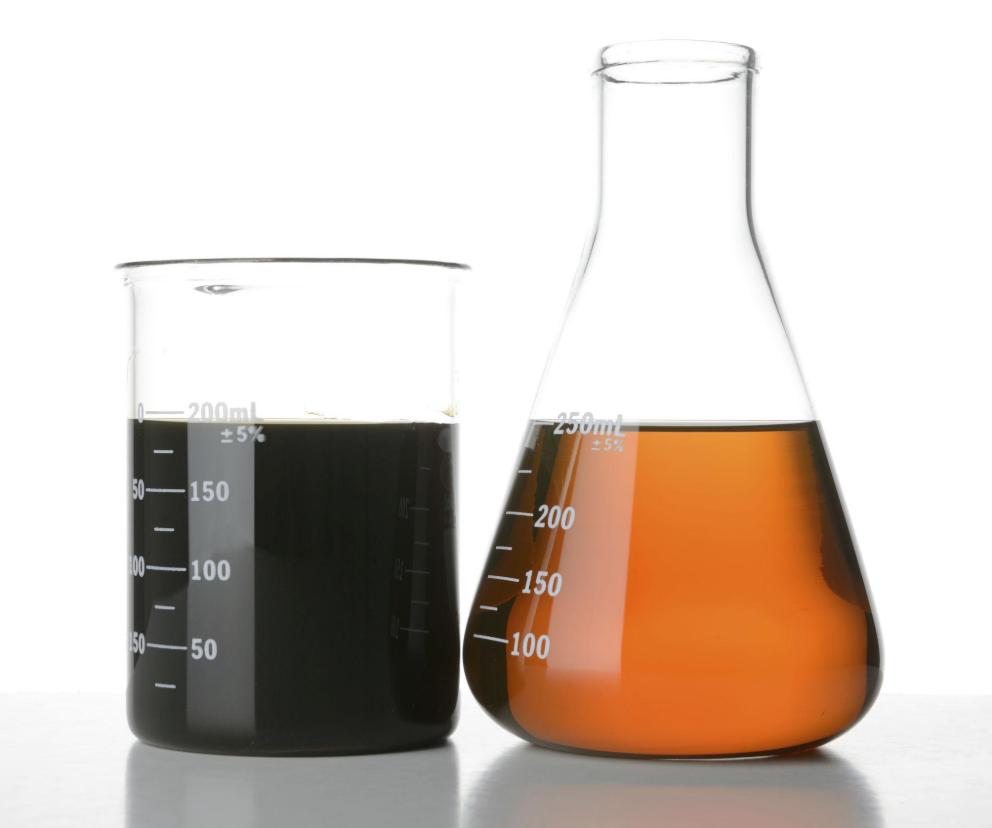
During operation of the engine, motor oil is subject to high temperature, pressure, oxidation, and contact with combustion products and metal surfaces. As a result, the properties of the motor oil are changed.
Several types of contamination and degradation products may occur in the used motor oil:
- Products of oxidation: Acids, sludge, and other products of oxidation due to high temperature.
- Degraded additives: Detergents, dispersants, antioxidants, and anti-wear additives lose their effectiveness.
- Contamination with water and fuel: Moisture, unburned fuel, and other volatile components may get into the oil.
- Solid impurities: Soot, metal particles, carbon deposits, and other solid contaminants may accumulate.
All these substances render the used motor oil not suitable for further use as a lubricant. However, a part of the oil components of used motor oil can be recovered using proper separation and refining processes.
Before choosing the re-refining process, the feedstock should be characterized by water content, sediment, viscosity, and other properties.
How Is Used Motor Oil Re-Refined into Base Oil?
The used motor oil re-refining process generally involves several stages, including feedstock pretreatment, dehydration, vacuum distillation, and further refining. The specific order of the processes can be varied depending on feed characteristics, plant capacity, and desired properties of the output base oils.
Feedstock Pretreatment
Used motor oil collected from the market then proceeds to the pretreatment unit, where filtration, settling, and any other available processes for removing free water, sludge, and solid contaminants are carried out.
This step is aimed at reducing the contaminant level in the oil prior to feeding into the major thermal treatment equipment.
Dehydration and Separation of Light Ends
The oil is dehydrated following the filtration stage to strip off any remaining moisture. In some instances, light hydrocarbons as well as other volatile compounds may be stripped off along with moisture.
Water stripping becomes necessary as too much moisture might affect processing in the next stages.
Vacuum Distillation and Thin-Film Evaporation
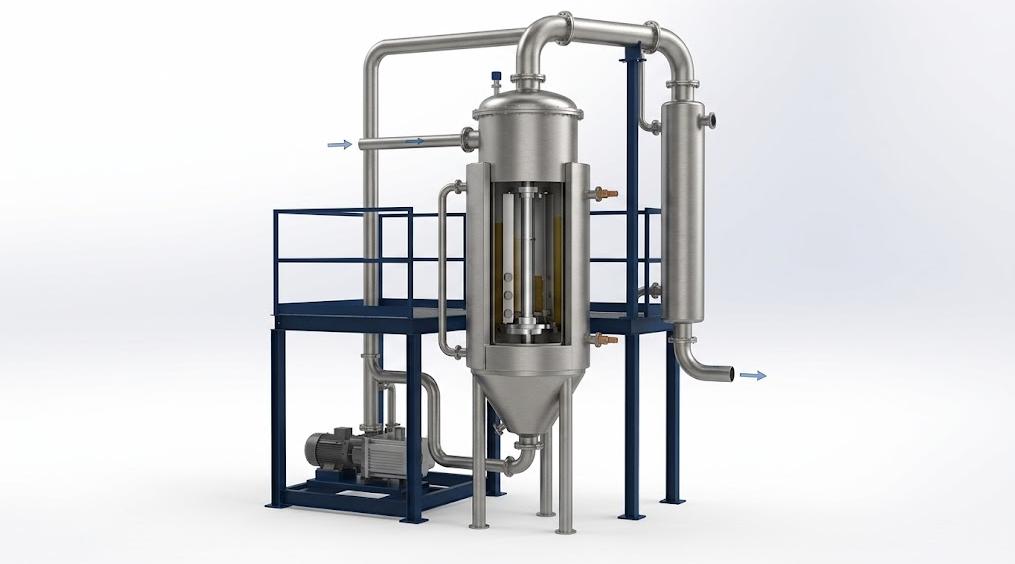
Following pretreatment and dehydration, the oil proceeds to the distillation zone. In vacuum distillation, various oil fractions are separated under vacuum. Thus, the high-boiling-point oil fractions can be extracted at low temperatures due to the absence of atmospheric pressure.
An alternative for the process scheme is high-vacuum thin-film evaporation. As mentioned above, the thin-film evaporator is characterized by forming a thin layer of the material being treated and a high heat transfer rate due to the shortened material thermal residence time.
Collected vapors are separated depending on the boiling range of the materials, while the rest of the residues are separated out.
The choice of vacuum distillation, thin-film evaporation, or both depends on particular feedstock properties, production capacity, and desired oil quality.
Additional Refining and Product Treatment
Though distillation is used to separate the desired fractions of lubricants, it can contain unwanted color bodies, oxidation products, sulfur-containing compounds, and other contaminants in its recovered distillate.
Additional refining can thus be necessary for the fulfillment of the desired base oil specifications. According to the type of design of the facility, some of the methods which can be used include adsorbent treatment, solvent extraction, and hydrofinishing.
The base oil is then subjected to filtration, storage, and testing. It would thus be prudent to use the degree of treatment based on the desired application and specifications, rather than basing it on a standard procedure for each and every re-refining plant.
For further process design, check out our Waste Oil to Base Oil Plant.
What Determines the Quality of Re-Refined Base Oil?
Re-refining base oil quality is dependent on many parameters within the process system. The design of a good plant needs to take into account the characteristics of the feedstock and the final product.
Feedstock characteristics
Various sources of used motor oils have widely varying characteristics in terms of moisture content, sediments, viscosity, and contamination levels. Analysis of the feedstock helps determine which methods are appropriate for treatment.
Distillation and separation efficiency
Effect of operating conditions, vacuum distillation efficiency, temperature control, and separation efficiency on oil recovery
Poor separation efficiency will cause unnecessary materials to be present in the recovered distillate.
Further refining technologies
The degree of refining required depends on the nature of the distillate and the final base oil specifications. Further processing may be needed to enhance certain properties such as color and oxidation stability.
Testing of the final product
The recovered base oil needs to undergo tests to determine its suitability for its intended end use, which includes viscosity, viscosity index, flash point, pour point, and color, among others.
What Equipment Is Required for Used Motor Oil Re-Refining?
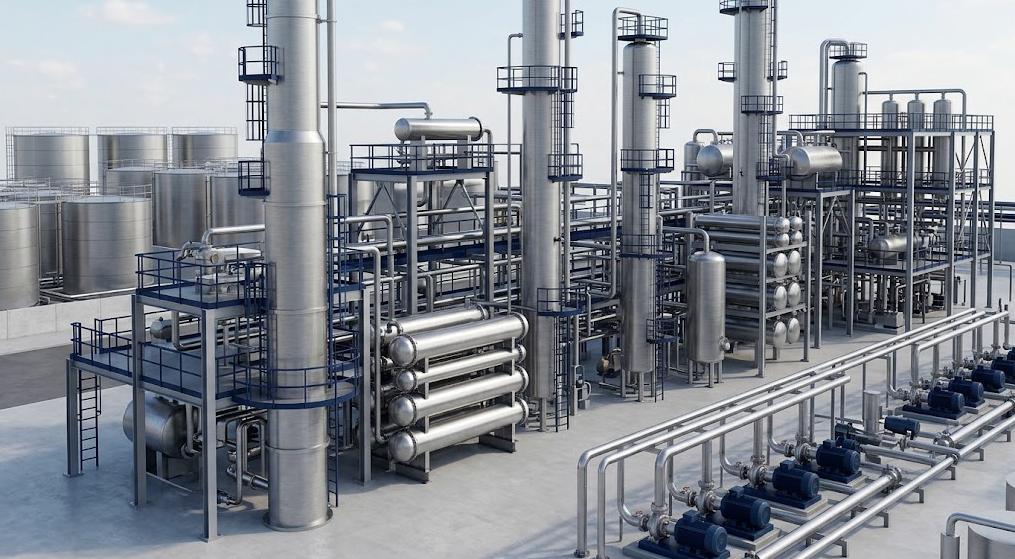
The structure of a used motor oil re-refining plant usually includes several processes that are connected to each other.
- Pretreatment process: The process of storage, settling, filtration, and feed preparation with removal of contaminants.
- Dehydration process: The process of heating and separation with removal of water and volatile components.
- Distillation and vacuum system: Distillation towers, thin film evaporator if needed, vacuum pumps, and heat exchange equipment.
- Condensation and separation process: The process of condensation, collection of the recovered fractions, and their separation.
- Further refining process: Refining equipment depending on the requirements of the final product and the choice of the refining method.
- Storage and control process: Product storage tanks, pumps and other instruments, and automated control process of the plant.
The choice of the equipment configuration must be based on the real feedstock, process capacity, conditions, and product specifications. Not every project needs the same equipment configuration and refining sequence.
Discuss Your Used Motor Oil Re-Refining Project
The planning of the re-refining plant for used motor oil should be based on an accurate analysis of the feedstock and the desired base oil grade.
VBOLT provides industrial used motor oil re-refining plant solutions with process configurations tailored to feedstock characteristics, processing capacity, and target base oil specifications.
Contact us with information about your feedstock type, its availability, desired processing capacity and base oil quality and project location to get a discussion about the suitable technical solution for you.
Have a look at our Waste Oil to Base Oil Plant or more information about our Waste Oil to Base Oil Engineering Solution.