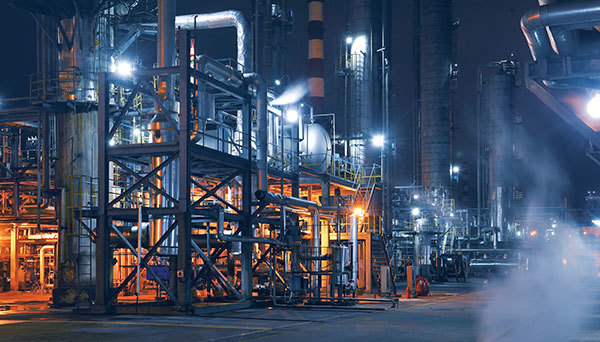
Thin Film Distillation Advantage
Rapid heat transfer and short residence time help reduce thermal cracking, lower coking risk and improve recovery of useful oil components.

Waste Oil Regeneration to Diesel Engineering Solution
Summary of the Scheme
- SOLUTION
Summary of the Scheme
The VBOLT-DD series adopts a modular process route to convert waste engine oil, used lubricating oil and other waste mineral oils into high-quality diesel products through pretreatment, thin film distillation, fractionation, refining and oxidative extraction desulfurization.

This engineering solution is designed for waste oil upgrading projects that require continuous production, improved diesel quality and a more advanced process route than simple direct distillation.

Rapid heat transfer and short residence time help reduce thermal cracking, lower coking risk and improve recovery of useful oil components.

Fractionation, refining and desulfurization help produce a more stable, cleaner and higher-value diesel product.

The line can be configured according to feedstock condition, target diesel quality, capacity demand and future expansion plan.
The VBOLT-DD series adopts a modular continuous route from feed pretreatment to final diesel upgrading.
Remove water, sludge, suspended solids and mechanical impurities to improve feed quality.
Achieve efficient heat transfer and recovery with short residence time and lower thermal damage.
Separate target fuel fractions according to boiling range for more controlled upgrading.
Improve cleanliness, appearance and storage stability of the recovered diesel stream.
Use oxidative extraction desulfurization to reduce sulfur compounds and improve fuel quality.
Each process stage is modularized to support stable industrial production and flexible engineering configuration.
Designed for feed stabilization before thermal processing.
Key section for controlled thermal separation and useful oil recovery.
Final upgrading stage for product quality improvement and sulfur reduction.
Real process diagrams and equipment photos help customers better understand the engineering route and module configuration.
This waste oil regeneration to diesel solution is suitable for industrial recycling and fuel recovery projects requiring a more complete upgrading process.
Suitable for professional waste oil collection and regeneration facilities.
For projects converting used lubricating oil into higher-value diesel products.
Supports industrial resource recovery and downstream fuel upgrading applications.
Suitable for environmental treatment enterprises and circular economy investments.
Supports resource recycling strategies and industrial sustainability planning.
Suitable for customers requiring refining and desulfurization rather than simple distillation.
Can be adapted for different capacities, layouts and local utility conditions.
Supports customized project engineering for overseas standards and installation conditions.
Final project configuration depends on feedstock condition, sulfur reduction target, daily processing capacity and plant engineering requirements.
| Item | Reference Description |
|---|---|
| Applicable Feedstocks | Waste engine oil, used motor oil, waste lubricating oil, hydraulic oil, gear oil, transmission oil, mixed mineral-based waste oils |
| Core Process Route | Pretreatment + Thin Film Distillation + Fractionation + Refining + Oxidative Extraction Desulfurization |
| Production Mode | Continuous industrial production |
| Target Product | Upgraded diesel product |
| Pretreatment Function | Water removal, sludge reduction, suspended solids and impurity removal |
| Distillation Feature | Short residence time, rapid heat transfer, lower coking risk |
| Fractionation Function | Boiling-range-based controlled separation |
| Refining Function | Improved cleanliness, appearance and storage stability |
| Desulfurization Method | Oxidative extraction desulfurization |
| Capacity Range | Customized according to project requirement |
| Automation Level | Manual, semi-automatic or automatic optional |
| Engineering Customization | Layout, utility system, module combination and supporting equipment can be customized |
Here are some common questions from customers planning waste oil upgrading and diesel recovery projects.
Yes. With a suitable regeneration and upgrading process, waste engine oil, used lubricating oil and other waste mineral oils can be converted into diesel products. Final product quality depends on feedstock condition and process configuration.
Thin film distillation improves heat transfer efficiency and shortens material residence time. This helps reduce thermal cracking and coking risk while improving recovery of useful oil fractions.
Fractionation separates the distilled oil according to boiling range, creating a better base for downstream refining and final diesel quality upgrading.
This step reduces sulfur-containing compounds in the recovered oil, improving environmental performance and market value of the final diesel product.
Yes. Capacity, pretreatment level, module combination, automation configuration and supporting systems can all be customized according to project requirements.
The system can be designed for waste engine oil, used motor oil, waste lubricating oil, industrial waste oil, hydraulic oil, gear oil, transmission oil and mixed mineral-based waste oils.
If you are planning a waste oil regeneration or diesel recovery project, we can provide a suitable engineering solution based on your feedstock type, capacity requirement and target product quality.
Contact Us- VBOLT
Related product recommendations
Waste Oil Recycling Plant & Machine
Base Oil Solvent Extraction Plant
Lubricating Oil Blending Plant
- I WANT TO CONSULT
I want to consult
During the process of browsing our products, is there anything that you are particularly satisfied with or that needs to be improved? Your consultation or suggestions will directly help us improve product and service quality and bring you a more intimate experience.
* Please fill in the above fields (* indicates required fields), and we will reply to your feedback as soon as possible.
FAQ
Please refer to the following instructions for your questions